Tampa Bay 10 reported on this story, of Scientologists work to help kids stay off drugs
Clearwater, Florida – Pat Harney is the spokeswoman for the Church of Scientology's World Spiritual Headquarters in Clearwater.
She is showing off a packet of pamphlets that draw all eyes to drugs that are known for their abuse on the streets, like Crystal Meth, LSD, cocaine, and marijuana.
Pat Harney, Church of Scientology Spokeswoman:
"45-percent of kids take marijuana in a one-month period."
Wednesday, November 01, 2006
Wednesday, October 25, 2006
Keep Psychs Away from our Kids
This article on the latest fraudulent disorder created by psychiatrists to get the rest of us onto the drugs pharmaceutical companies concoct is just one more piece of evidence showing we should NEVER let these guys near our kids.
Anyone who is as crazy as to devise a disorder out of shopping too much should be labled as irresponsible and prevented from "diagnosing" anyone by themselves.
Another Bogus Psychiatric “Disorder” Foisted On Society
The invention of so- called “binge shopping” is simply another ploy to include yet another bogus disorder in the psychiatric billing “bible”. October 31 2006 10/21/2006 7:42 PM GMT (TransWorldNews)
Anyone who is as crazy as to devise a disorder out of shopping too much should be labled as irresponsible and prevented from "diagnosing" anyone by themselves.
Another Bogus Psychiatric “Disorder” Foisted On Society
The invention of so- called “binge shopping” is simply another ploy to include yet another bogus disorder in the psychiatric billing “bible”. October 31 2006 10/21/2006 7:42 PM GMT (TransWorldNews)
For over a decade CCHR has called on governments to eliminate the DSM as a valid diagnostic manual for insurance reimbursement, medical plan payments or for the basis of any legislation or court testimony. “It is an unreliable, pseudo-scientific document with enormous power to damage lives, while being used to rake in $76 billion a year in international psychiatric drug sales,” Said Brian Beaumont, the president of the Vancouver Chapter of the Citizens Commission on Human Rights.
Scores of new disorders are literally voted in with each new edition of the American Psychiatric Association's Diagnostics and Statistical Manual. One of this manual's main uses is billing insurance companies an bilking medical health plans. If the syndrome is in the book, the label can be applied to a person, drugs administered, and the insurance company billed.
A recent study by Lisa Cosgrove, a psychologist from the
If you know anyone, including a child, who has been abused or harmed by a psychiatrist call The Citizens Commission on Human Rights at 1 800 670 2247. Complete confidentiality assured.
Friday, October 20, 2006
Psychiatry
I couldn't agree more with this person's views of psychiatry.
BetsyD posts the full article on her blog.

BetsyD posts the full article on her blog.
Thursday, October 19, 2006
Childrens' Rights - HRW
Human Rights Watch has compiled the following data on child labor - something all of us need to get involved in changing:
The International Labour Organization (ILO) has estimated that 250 million children between the ages of five and fourteen work in developing countries—at least 120 million on a full time basis. Sixty-one percent of these are in Asia, 32 percent in Africa, and 7 percent in Latin America. Most working children in rural areas are found in agriculture; many children work as domestics; urban children work in trade and services, with fewer in manufacturing and construction.
Child labor ranges from four-year-olds tied to rug looms to keep them from running away, to seventeen-year-olds helping out on the family farm. In some cases, a child's work can be helpful to him or her and to the family; working and earning can be a positive experience in a child's growing up. This depends largely on the age of the child, the conditions in which the child works, and whether work prevents the child from going to school.
The Children's Rights Division at Human Rights Watch has focused its efforts on the worst forms of child labor, those prohibited by the ILO’s Worst Forms of Child Labour Convention. Children who work long hours, often in dangerous and unhealthy conditions, are exposed to lasting physical and psychological harm. Working at rug looms, for example, has left children disabled with eye damage, lung disease, stunted growth, and a susceptibility to arthritis as they grow older. Children making silk thread in India dip their hands into boiling water that burns and blisters them, breath smoke and fumes from machinery, handle dead worms that cause infections, and guide twisting threads that cut their fingers. Children harvesting sugar cane in El Salvador use machetes to cut cane for up to nine hours a day in the hot sun; injuries to their hands and legs are common and medical care is often not available.
Denied an education and a normal childhood, some children are confined and beaten, reduced to slavery. Some are denied freedom of movement—the right to leave the workplace and go home to their families. Some are abducted and forced to work. The human rights abuses in these practices are clear and acute. We have found similar problems in Asia, the Middle East, Latin America, and the United States: children who work for too many hours and too many days, for too little, or sometimes no pay, subject often to physical abuse, exposed to dangerous pesticides, and made to work with too dangerous tools. Our objectives in tackling these aspects of the complex and troubling child labor issue include drawing attention to the plight of child workers, helping to end these appalling practices, and contributing to the debate on the rights dimension of the larger issue of children and work. >>
The International Labour Organization (ILO) has estimated that 250 million children between the ages of five and fourteen work in developing countries—at least 120 million on a full time basis. Sixty-one percent of these are in Asia, 32 percent in Africa, and 7 percent in Latin America. Most working children in rural areas are found in agriculture; many children work as domestics; urban children work in trade and services, with fewer in manufacturing and construction.
Child labor ranges from four-year-olds tied to rug looms to keep them from running away, to seventeen-year-olds helping out on the family farm. In some cases, a child's work can be helpful to him or her and to the family; working and earning can be a positive experience in a child's growing up. This depends largely on the age of the child, the conditions in which the child works, and whether work prevents the child from going to school.
The Children's Rights Division at Human Rights Watch has focused its efforts on the worst forms of child labor, those prohibited by the ILO’s Worst Forms of Child Labour Convention. Children who work long hours, often in dangerous and unhealthy conditions, are exposed to lasting physical and psychological harm. Working at rug looms, for example, has left children disabled with eye damage, lung disease, stunted growth, and a susceptibility to arthritis as they grow older. Children making silk thread in India dip their hands into boiling water that burns and blisters them, breath smoke and fumes from machinery, handle dead worms that cause infections, and guide twisting threads that cut their fingers. Children harvesting sugar cane in El Salvador use machetes to cut cane for up to nine hours a day in the hot sun; injuries to their hands and legs are common and medical care is often not available.
Denied an education and a normal childhood, some children are confined and beaten, reduced to slavery. Some are denied freedom of movement—the right to leave the workplace and go home to their families. Some are abducted and forced to work. The human rights abuses in these practices are clear and acute. We have found similar problems in Asia, the Middle East, Latin America, and the United States: children who work for too many hours and too many days, for too little, or sometimes no pay, subject often to physical abuse, exposed to dangerous pesticides, and made to work with too dangerous tools. Our objectives in tackling these aspects of the complex and troubling child labor issue include drawing attention to the plight of child workers, helping to end these appalling practices, and contributing to the debate on the rights dimension of the larger issue of children and work. >>
Wednesday, October 18, 2006
Scientology Handbook
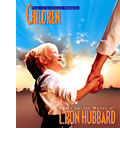 There's a section of the Scientology Handbook about children.
For any parent who would like a hand with their kids I recommend reading this. Very helpful.
Tuesday, October 17, 2006
Stand Up Against Poverty

23 million people take a stand against poverty
More than 23 million people across the globe have set a new Guinness World Record for the largest number of people to literally “Stand Up” against poverty. And the numbers are still coming in. People stood together: cricket fans in India; school children in Gaza and the West Bank; crowds at a concert in a slum in Zimbabwe and at Times Square in New York all joined for the world record attempt on 15-16 October. The worldwide public action was co-ordinated by the Global Call to Action against Poverty and the UN Millennium Campaign.

Sunday, October 15, 2006
Some interesting facts on marijuana, from the Scientology drug information web site:
Sixty percent of teenagers in drug treatment programs are there because of marijuana. According to a National Household Survey on Drug Abuse, kids who frequently use marijuana are almost four times more likely to act violently or damage property. They are five times more likely to steal than those who do not use the drug.
Marijuana is often more potent today than it used to be. Growing techniques and selective use of seeds have produced a more powerful drug. Correspondingly, there has been a sharp increase in the number of marijuana-related emergency room visits by young pot smokers.
Because a tolerance builds up, marijuana can lead users to consume stronger drugs to achieve the same high. When the effects start to wear off, the person may turn to more potent drugs to rid himself of the unwanted conditions that prompted him to take marijuana in the first place.
Marijuana itself does not lead the person to the other drugs: people take drugs to get rid of unwanted situations or feelings. The drug (marijuana) masks the problem for a time (while the user is high). When the“high fades, the problem, unwanted condition or situation returns more intensely than before. The user may then turn to stronger drugs since marijuana no longer “works.” >>
Scientology churches and missions have been active in helping people with drug problems since the mid-1960's and there have been Scientology anti-drug programs for the past 20 years.
I'm personally committed to helping kids steer clear of drugs.
Sixty percent of teenagers in drug treatment programs are there because of marijuana. According to a National Household Survey on Drug Abuse, kids who frequently use marijuana are almost four times more likely to act violently or damage property. They are five times more likely to steal than those who do not use the drug.
Marijuana is often more potent today than it used to be. Growing techniques and selective use of seeds have produced a more powerful drug. Correspondingly, there has been a sharp increase in the number of marijuana-related emergency room visits by young pot smokers.
Because a tolerance builds up, marijuana can lead users to consume stronger drugs to achieve the same high. When the effects start to wear off, the person may turn to more potent drugs to rid himself of the unwanted conditions that prompted him to take marijuana in the first place.
Marijuana itself does not lead the person to the other drugs: people take drugs to get rid of unwanted situations or feelings. The drug (marijuana) masks the problem for a time (while the user is high). When the“high fades, the problem, unwanted condition or situation returns more intensely than before. The user may then turn to stronger drugs since marijuana no longer “works.” >>
Scientology churches and missions have been active in helping people with drug problems since the mid-1960's and there have been Scientology anti-drug programs for the past 20 years.
I'm personally committed to helping kids steer clear of drugs.
Saturday, October 14, 2006
Marriage and Children - a Human Right
 Here's one of my favorite human rights videos - they're public service announcements that the Church of Scientology International created for Youth for Human Rights, to help them with their human rights education campaign.
This one is on the right to marriage and children. I didn't have any idea that this was considered a human right until I saw the videos!
You can watch it right here!
Youth for Human Rights
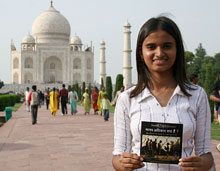 Youth for Human Rights gives teens and children a voice in their own future.
Here's a video that tells the story:
Friday, October 13, 2006
Childrens' Rights
I found a series of videos on human rights that are really beautiful.
I thought I'd share them here.
My favorite is the first one: We're all born free and equal
